What is at the Core of your Creation?
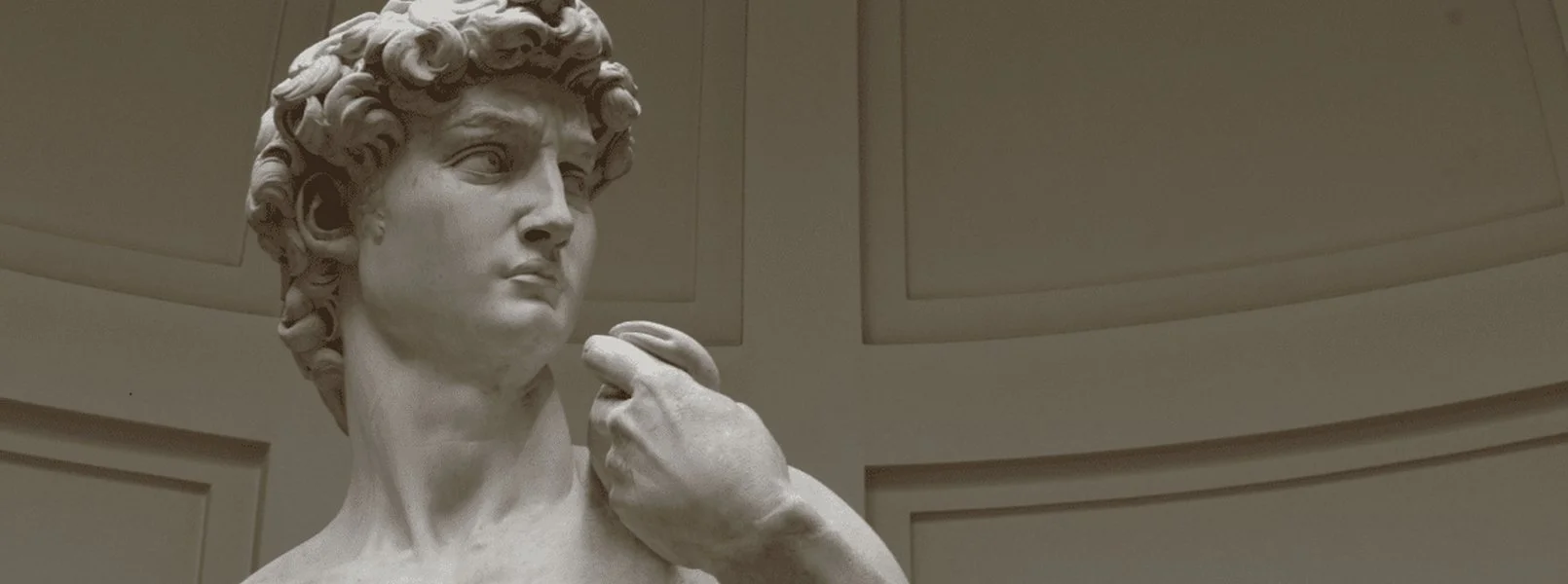
A lesson from Michelangelo
Michelangelo was 26 years old when he started to carve a statue of David from a huge piece of marble. It took him three years to finish his 17-foot masterpiece, which weighed 8.5 tons. What a feat! He famously claimed he did not create the statue but merely "set him free" from the stone. The figure already existed; his task was to chip away at it until it emerged.
It’s an interesting philosophy and one we can apply to our writing. Have our stories always been there, just looking for an author to immortalise them in print? Historical fiction writers often thread together several true-life events, albeit with a fictitious gloss and with invented protagonists. Thus the stories predate the novels. Perhaps it’s the case with all books – to a greater or lesser extent they are all based on real life. In that case are we all Michelangelos, revealing our creations bit by bit?
I’m tying myself in knots here, but I think the question I’m asking is, what is at the core of your creation? What are you trying to reveal in your story? If we don’t know the answer to that question, we might be chipping away to no purpose. Writing a novel takes a huge amount of time and effort, not to mention blood, sweat and tears. We need to have something powerful to communicate, or our writing will have no conviction. And all that effort will be in vain.
Sometimes prospective agents or editors ask writers to come up with an ‘elevator pitch’ – a two-line summary of their novel, one that could be communicated in the time it takes an elevator to get to the top of a building. I must admit, I struggle with this. Luckily my editor is brilliant at condensing the essence of my story to a few words. For my new novel, she’s come up with ‘Her mother was taken. Will she find her way home?’ It accompanies a picture of a little girl at her bedroom window, looking up at the night sky. At the core of the novel is a severing of one of the most fundamental relationships, that of a parent and a child, and the desperate longing of both to be reunited. That element was always in my story, but it was my editor that chipped away at the other issues competing for space, and found what the novel was really about.
I suspect none of us will be a new Michelangelo, but we can all ask ourselves key questions about our stories. If we find out what is at their core then our stories will come alive. And who knows where that will take them?